Push to Play: What Happens to a DJ's Skills When the Machine Does the Counting
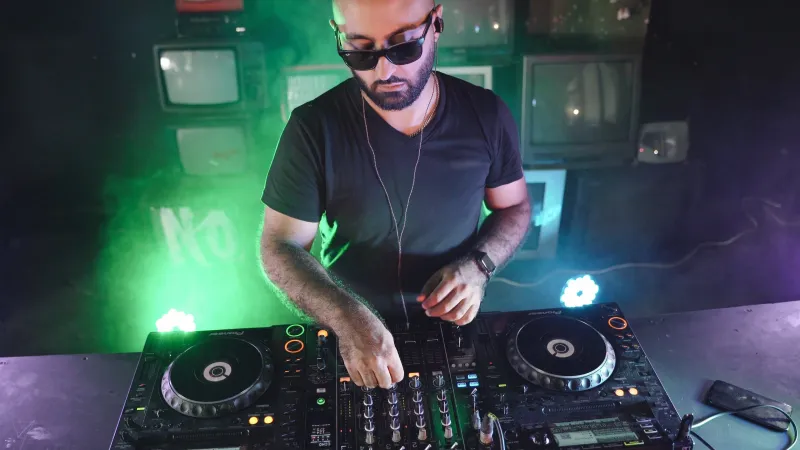
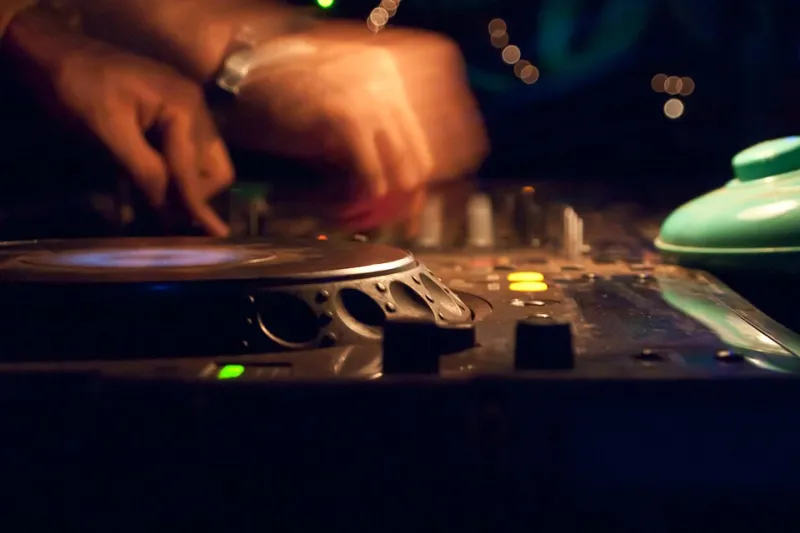
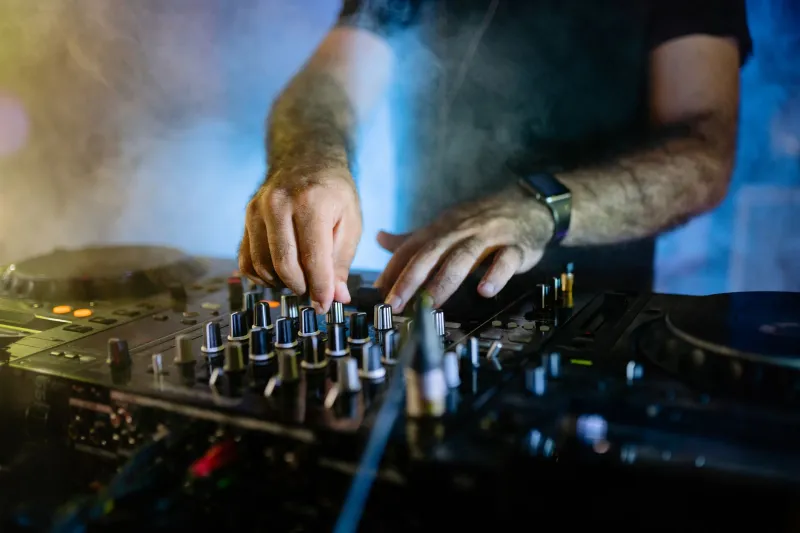
Photo: DJ controller sync button close up studio hands mixing, via images.pexels.com
The sync button debate has been running for over a decade now, and it shows no sign of cooling down. On one side, you have veteran DJs who treat manual beatmatching as a foundational skill — the kind of thing that separates someone who is a DJ from someone who plays DJ. On the other side, you have a generation of producers and performers who view sync as simply another tool, no different from a pitch fader or a loop function, and can't quite understand why anyone would do manually what a computer can do more accurately in milliseconds.
Both sides are making real points. And both sides are missing something.
What Sync Actually Does
Let's get the mechanics straight, because a lot of this debate gets muddled by people arguing past each other about things that aren't quite what they think they are.
Sync — in its most common implementation on platforms like Serato, Rekordbox, and Traktor — locks the tempo of two tracks together and aligns their beat grids. It doesn't mix the records for you. It doesn't choose when to bring the new track in, how to blend the frequencies, or what to do with the EQ. It handles one specific task — tempo alignment — and hands everything else back to the DJ.
That's worth keeping in mind, because the common framing of sync as "the machine doing the DJing" is inaccurate. What sync does is remove the arithmetic. The musical judgment — reading the room, choosing the track, managing the energy, building the narrative — stays entirely with the human.
So why does it bother people so much?
The Muscle Memory Question
Here's where the concern gets more legitimate. Manual beatmatching isn't just a technical task — it's a form of active listening that forces the DJ to stay physically and mentally engaged with the music in a very specific way. When you're nudging a platter or riding a pitch fader to lock two tracks together, you are hearing the relationship between those two records at a granular level. You're feeling the drift. You're making micro-corrections. You're, in a very real sense, playing the music rather than just triggering it.
Veteran DJ and educator Pat Holloway, who's been teaching DJ technique in Philadelphia for over fifteen years, describes it this way: "Beatmatching by ear is like learning to drive stick before you drive automatic. The automatic car isn't worse. But driving stick taught you things about how the car works that you carry with you even when you switch. If you skip that step entirely, there's a gap in your understanding."
Holloway's concern isn't that sync users are cheating — it's that a generation of DJs may be entering the culture without the foundational listening skills that manual mixing develops. And those skills, he argues, show up everywhere else in a set, not just in the transitions.
The Other Side of the Booth
Spend five minutes with any working producer-DJ under thirty and you'll hear a very different perspective.
"I make music," says Miami-based electronic producer and DJ Jasmine Ortega. "When I'm playing a set, I'm thinking about energy, about sound design, about what the room needs. I'm not thinking about whether two kick drums are exactly aligned because the software already handled that. Sync freed me up to focus on the things that actually matter to the audience."
Ortega's point is hard to dismiss. The cognitive load of manual beatmatching is real, and every mental resource you spend on tempo arithmetic is a resource you're not spending on the creative decisions that determine whether a set is memorable. For DJs who also produce — who spend hours in a DAW thinking about arrangement, sound selection, and emotional arc — offloading the mechanical task of tempo alignment to a machine makes a certain kind of sense.
There's also the consistency argument. Sync doesn't get tired. It doesn't make a mistake at 2 AM because it's been on its feet for four hours. In a high-stakes performance environment, that reliability has real value.
The Generational Fault Line
What's interesting about this debate is how cleanly it maps onto generational experience. DJs who came up on vinyl or early CDJs — who had no sync option and no choice but to develop their ears — tend to view manual beatmatching as a fundamental competency, like knowing how to write before you use spell-check. DJs who came up with sync available from the start tend to view it as a baseline feature of the equipment, like having a screen that shows BPM. Neither group is wrong about their own experience.
The friction happens when these two groups share spaces — clubs, DJ schools, online forums — and each interprets the other's approach as either laziness or unnecessary gatekeeping. The veteran sees the sync user as someone who skipped the homework. The sync user sees the veteran as someone defending an arbitrary tradition.
Both reads have some truth in them.
A More Useful Frame
Rather than arguing about whether sync is legitimate, it might be more productive to ask: what do you actually want to be able to do, and what skills does that require?
If you want to play vinyl — now or ever — you need manual beatmatching skills. Full stop. The records don't have a sync button.
If you want to play in situations where your equipment fails or behaves unexpectedly, manual skills are a genuine safety net. Technology breaks. Knowing how to work without it is not a nostalgia trip — it's practical resilience.
If you want to play back-to-back with DJs who use vinyl or who come from a manual tradition, being able to meet them in that space matters for the collaboration.
On the other hand, if your goal is to push your musical and emotional range as far as possible — to think harder about track selection, energy management, and crowd psychology — and sync frees up the mental bandwidth to do that, then using it thoughtfully is a completely defensible choice.
The word "thoughtfully" is doing a lot of work in that sentence. Sync as a crutch that lets you disengage from the music is a problem. Sync as a tool that lets you engage more deeply with the parts of DJing that machines can't replicate is something else entirely.
The debate will keep going. But maybe the more honest question isn't sync or no sync — it's what you're doing with the attention you've freed up.