Comfortable and Stuck: The Real Cost of Never Leaving Your Home Club
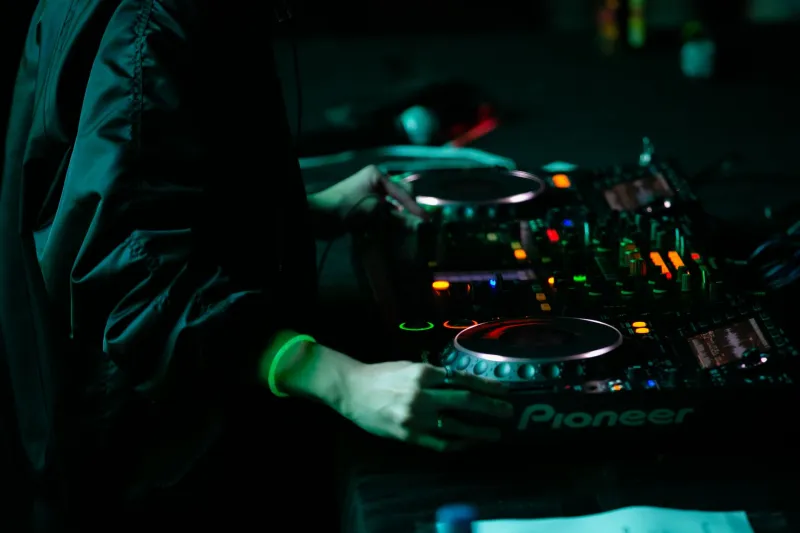
The residency story is one of the most repeated myths in DJ culture. You land a weekly or monthly slot at a respected venue, build a following, hone your sound in front of a consistent crowd, and eventually that foundation launches you into something bigger. It's the conventional wisdom. It's what gets passed down from older DJs to younger ones like gospel.
And for some people, it's completely true.
For others, though, the residency becomes something nobody warned them about: a very comfortable box.
The Seduction of the Sure Thing
Let's be honest about why residencies feel so good. In an industry defined by uncertainty — where gigs dry up, bookings fall through, and your career can pivot on the tastes of a single club owner — a guaranteed slot every week is genuinely valuable. You know the room. You know the sound system. You know the regulars. There's a baseline income, however modest, and a built-in audience that shows up expecting you.
That consistency has real artistic value too. Playing the same room repeatedly teaches you things about crowd dynamics, set construction, and timing that a series of one-off gigs simply can't replicate. Some of the most technically sophisticated DJs in the country built their skills in residency situations precisely because the repetition forced them to evolve.
But there's a shadow side to all of that comfort, and it shows up gradually enough that a lot of DJs don't notice it until they're years in.
When the Room Becomes a Ceiling
DJ and producer Layla Voss spent four years holding down a Friday night residency at a well-regarded electronic music bar in Portland, Oregon. By most external measures, she was thriving — packed room, strong social following, and a reputation as one of the best in the city. By her own internal measure, she was starting to panic.
"I realized I'd stopped being challenged," she says. "I knew exactly what that crowd wanted, and I knew how to give it to them every single week. And that sounds like a success story, but it wasn't making me better. It was making me more efficient at doing the same thing."
When she started reaching out to promoters in Seattle, San Francisco, and eventually Chicago, she ran into a problem she hadn't anticipated: outside of Portland, nobody knew who she was. Four years of building a local reputation had produced almost no transferable currency in other markets.
"The residency had given me a following in one room. That's it. I had to basically start over everywhere else, except now I was four years older and competing with people who'd spent that time diversifying their network."
Voss eventually walked away from the residency and spent the better part of a year grinding one-off bookings in unfamiliar rooms before her profile started building nationally. She doesn't regret it, but she's clear-eyed about the cost.
The Visibility Problem Nobody Talks About
There's a structural issue baked into residency life that rarely gets discussed: you become very visible to a very specific, very local audience, and almost invisible to everyone else.
In an era where a DJ's profile is increasingly built through streaming mixes, social media, and the kind of cross-market buzz that gets you onto festival lineups and touring circuits, being a beloved fixture at one club can actually work against you. Bookers and festival programmers are often looking for names that travel — artists with audiences in multiple cities, not deep roots in one.
"I've seen incredibly talented DJs get passed over for opportunities because their whole identity was tied to one venue," says Marcus Webb, a talent buyer who works with venues and festivals across the Southeast. "It's not that we don't respect what they've built locally. It's that we need to know an act can draw in a room where nobody knows them yet. A residency doesn't prove that."
This is the visibility trap in its purest form: the very thing that makes you successful locally is the thing that limits your credibility regionally and nationally.
The Other Side: Why Some DJs Made the Right Call Staying
None of this means residencies are inherently a mistake. For a specific type of DJ with a specific type of goal, they're exactly right.
Chicago-based DJ and promoter Devon Sharpe has held a monthly residency at the same underground house club for going on seven years. He has no interest in touring, no particular desire to play festivals, and has built a secondary income stream through production work and local event consulting that makes his financial picture comfortable without needing to chase bookings in other cities.
"I think there's a version of this conversation where staying put is treated like failure or lack of ambition, and that's just not how I see it," Sharpe says. "I've built something real in this city. My crowd trusts me. I've watched people grow up coming to my nights. That means something. Not everyone needs to be on a global circuit to have a meaningful career."
Sharpe's perspective is a useful corrective to the idea that the only legitimate DJ career is one that scales nationally. The question isn't whether residencies are good or bad — it's whether the residency you're in is aligned with the career you actually want.
How to Know When It's Time to Go
For DJs sitting in a residency and feeling the first hints of that comfortable restlessness, there are some honest questions worth asking.
Are you still growing artistically? If your sets have stopped surprising you — if you know before you walk in the door exactly how the night will go — that's a signal worth taking seriously.
Is your local reputation translating to bookings elsewhere? If you've been at it for two or more years and you're still unknown outside your home market, the residency isn't building the kind of profile that travels.
What does your contract actually allow? Some residency agreements include exclusivity clauses that limit where and how often you can play in the same market. If yours does, understand what you're giving up.
Are you staying because it's working, or because leaving is scary? There's a difference between a residency that's actively serving your career and one that's simply providing security. Both are real, but only one is a strategy.
The Crossfade You Have to Make Yourself
The irony of the residency conversation is that the same principle that makes a great DJ great — knowing when to let a track go and move to the next one — applies directly to career decisions. The skill isn't just in the mix. It's in the timing.
Some DJs stay too long in rooms that stopped serving them years ago. Others leave too soon, before they've actually extracted the value a residency can provide. The ones who get it right are the ones who stay honest with themselves about which situation they're actually in.
The room will always be there. The question is whether you will.