The Faithful Few: Why the Last Hour of the Night Belongs to the Dancers Who Never Left
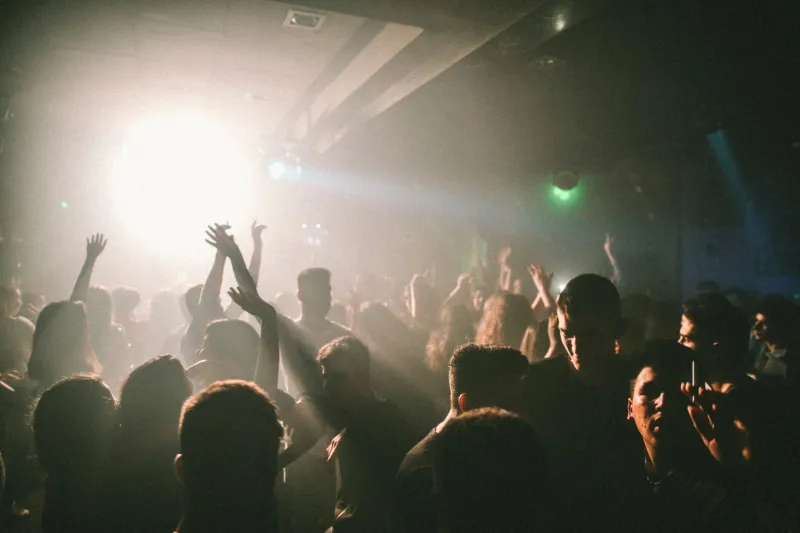
Somewhere around 3:45 AM, a club changes. You can feel it before you can explain it. The energy compresses, the room gets louder without getting busier, and the people still moving on the floor stop looking around to see who's watching. They're not performing anymore. They're just there.
This is the 4 AM phenomenon — and if you've never experienced it as a dancer or a DJ, it's genuinely hard to describe to someone who hasn't. But ask any working DJ who's ever held a late-night slot, and their voice shifts when they talk about it. Something in their face does too.
The Great Thinning
Every night at a club follows a kind of natural selection. The curious come early. The social crowd arrives fashionably late. The bridge-and-tunnel crew peaks around midnight, gets the Instagram content they came for, and starts heading toward the exit by 1:30. The people who showed up because their friend dragged them? Gone by 2. The ones who were hoping to meet someone? Either they did, or they didn't — either way, they've moved on.
What's left after all that filtering is something genuinely rare. DJ and producer Marcus Hale, who holds a residency at a Chicago club he asked us not to name, calls it "the distillation." He's been playing late-night sets in the Midwest for almost a decade.
"You lose maybe 70 percent of the room between midnight and 3 AM," he says. "But the 30 percent that's still there? They're not leaving. They came for this. They came for the weird hour, the deep cuts, the stuff I'd never risk at peak time. And they know it's coming."
That shared understanding — between DJ and dancer — is what makes late-night sets feel different from everything that came before them. It's less of a performance and more of a conversation between people who all decided, collectively, to stay.
The Room Gets Honest
Club culture in America has a performance layer baked into it. There's status signaling, there's social anxiety, there's the constant low hum of people deciding how they want to be perceived. That layer doesn't disappear by midnight. But by 4 AM, it's pretty much gone.
Regular club-goers who've experienced this describe it in strikingly similar terms regardless of the city. Destiny Okafor, a 29-year-old graphic designer from Atlanta who describes herself as a "die-hard late-stayer," puts it plainly: "The people still on the floor at 4 AM aren't thinking about anything except the music. You could look absolutely insane and nobody cares. Nobody's even looking at you that way. Everyone's just in it."
For DJs, that shift in crowd psychology is both a gift and a responsibility. The usual pressure points disappear — you're not fighting for attention, you're not trying to pull people onto the floor, and you're definitely not playing crowd-pleasers to keep the energy from collapsing. The crowd will stay regardless. What they want now is depth.
Playing Differently for the Dedicated
The late-late crowd doesn't just tolerate risk — they demand it. DJs who've mastered this window talk about making choices they'd never make at 11 PM: longer intros, stranger textures, tracks that breathe instead of punch.
Nia Velazquez, a Los Angeles-based DJ who plays primarily house and experimental electronic, describes her 3-to-close approach as almost therapeutic. "I think of it like the room has finally exhaled," she says. "At peak time, I'm thinking two or three tracks ahead, managing energy, watching the floor. At 4 AM, I'm just following a thread. I'll play something at 4 in the morning that I've been waiting all night to play. Something that needs space around it."
That philosophy — saving certain records for when the room is finally ready — is surprisingly common among experienced DJs. There are tracks that simply don't work at 11 PM. The crowd isn't in the right state. The context is wrong. But at 4 AM, with the lights low and the faithful still swaying, those records land like nothing else.
Marcus Hale keeps a mental list he calls his "late cards." "There are maybe 15 or 20 tracks I've never played before 3:30 AM in my life," he says. "I've thought about it. I've almost done it. But they belong to that hour. Playing them earlier would be like opening a really good bottle of wine and drinking it with cereal."
The Legend Problem
There's a well-documented phenomenon in nightlife where the sets people remember most are almost never the peak-hour ones. Ask a room full of club veterans about their most memorable night on a dance floor and the story usually starts with "it was late" or "I almost left before that."
Part of this is simple psychology — the late-night brain processes music differently, and the physical and emotional state of someone who's been dancing for four hours is genuinely altered. But part of it is also about what those sets represent. Staying until 4 AM is a choice. And when a DJ rewards that choice with something genuinely special, it creates a memory that's attached to a decision. That's stickier than something that just happened to you.
For DJs, that's the high. Not the peak-hour roar of a packed room, but the quiet electricity of a smaller crowd that chose to be there, receiving something they didn't expect.
The Weight of the Last Hour
Not every DJ is built for it. Playing late requires a specific kind of stamina — not physical, but emotional. You have to be willing to commit to a direction without a safety net, trust your read of a room that's operating on pure instinct, and let go of the crowd-management tricks that got you through the first half of the night.
"Some DJs peak early and then coast," says Velazquez. "And the late-night crowd can tell. They've been there all night. They've watched you work. If you show up to the last hour with the same energy you had at midnight, they'll feel the difference."
The 4 AM crowd asks for honesty. They've earned it by staying. And the DJs who understand that — who treat the final hour not as the tail end of a gig but as its most important chapter — are the ones who build the kind of devoted following that no algorithm can manufacture.
The crossfade from night into morning is its own art form. And the people still on the floor when it happens? They know exactly what they came for.