Dirty Signal: Why Producers Are Paying a Premium to Make Their Music Sound Broken
There's a strange irony sitting at the center of modern music production. We have more processing power, more pristine converters, and more technically perfect audio tools than at any point in history. And yet, the most coveted sound in American studios right now is the sound of something falling apart.
Tape hiss. Tube grit. The subtle warble of a worn belt drive. Harmonic distortion that shouldn't exist but somehow makes everything feel alive. Call it the analog warmth arms race — and in 2025, it is absolutely in full swing.
The Problem With Perfect
When digital audio workstations became the standard, the promise was simple: no noise floor, no degradation, infinite recall. And technically, that promise delivered. A 24-bit session at 96kHz is, by any measurable standard, a more accurate representation of sound than a reel of two-inch tape running at 30 inches per second.
But accurate isn't the same as emotional. And that gap — the space between technically correct and viscerally satisfying — is exactly where a whole industry has taken root.
The human ear didn't evolve alongside digital clocks and sample-accurate editing. It evolved alongside the physical world, where sound has weight, where rooms color frequencies, where machines add their own personality to whatever passes through them. When you strip all of that away, something subtle but significant disappears with it. Producers started noticing. Listeners started feeling it, even if they couldn't name it.
What Warmth Actually Is
Let's get specific, because "analog warmth" gets thrown around as a vague aesthetic preference when it's actually a set of measurable, reproducible phenomena.
Tape saturation introduces even-order harmonics — frequencies that are mathematically related to the original signal in ways that feel consonant and pleasing to the ear. Tube amplifiers do something similar, adding a harmonic richness that makes transients feel rounder and more controlled without killing the energy. Vinyl playback introduces tiny pitch variations from the stylus tracking the groove, plus a high-frequency rolloff and a noise floor that changes the perceived spatial depth of a recording.
None of these things are "better" in a technical sense. All of them are "better" in a human sense. That distinction is everything.
The Plugin Wars
The software side of this obsession is where things get genuinely fascinating — and expensive. The market for analog emulation plugins has exploded over the last three years, with developers competing to model specific pieces of hardware down to their individual quirks and failure modes.
Universal Audio's UAD platform remains the benchmark for hardware-accurate emulation, with models of the Studer A800 tape machine and the Neve 1073 preamp that have become studio staples. But newer players are pushing the category forward in interesting ways. Acustica Audio's "aqua" technology captures the nonlinear behavior of analog gear in ways that earlier convolution-based approaches couldn't, and the results are close enough to the real thing that blind tests have fooled working engineers.
For producers working in house, techno, and electronic music specifically, the tape saturation and vinyl simulation categories are arguably the most relevant. Tools like iZotope's Vinyl, Aberrant DSP's Digitalis, and RC-20 Retro Color by XLN Audio have found their way onto an enormous number of American producer setups — not as effects used sparingly, but as insert processors running on entire mixes, giving digital sessions a sense of physical texture they'd otherwise lack.
Then there's the lo-fi movement, which took this philosophy and ran it to an extreme. Deliberately degraded audio — pitched-down samples, dusty drum machines, crushed bit depths — became its own aesthetic language, one that now influences everything from bedroom pop to the chill house sets you'll find at rooftop parties in Brooklyn and Silver Lake.
The Hardware Believers
For a contingent of producers, plugins are a compromise they're not willing to accept. These are the people spending real money — sometimes serious real money — on actual analog gear.
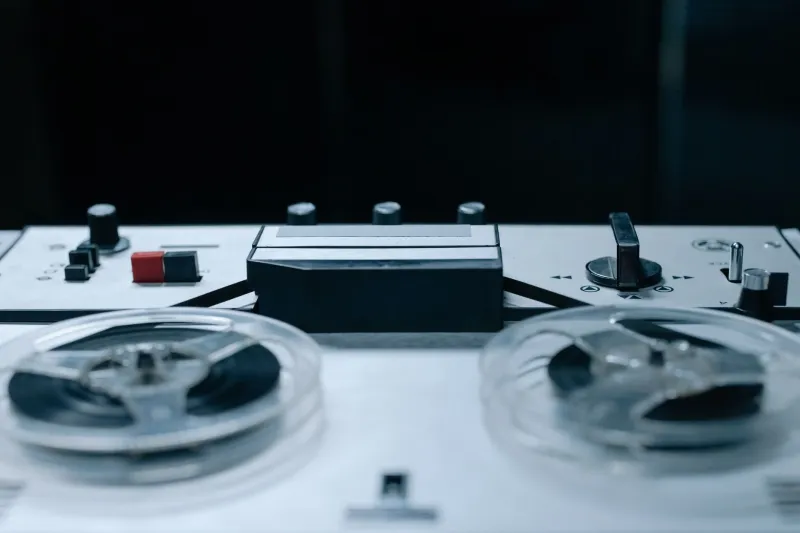
The market for vintage outboard equipment has been climbing steadily. A well-maintained Neve 33609 compressor now routinely trades for more than a decent used car. Reel-to-reel machines that spent years gathering dust in studio storage rooms are being restored and pressed back into service. The Tascam 388, the Otari MX-5050, the Ampex ATR-102 — machines with model names that meant nothing to most producers five years ago now have waiting lists.
But the hardware obsession isn't limited to vintage pieces. Companies like Warm Audio, Black Lion Audio, and Tegeler Audio Manufaktur have built entire business models around providing affordable analog signal paths for producers who want the real thing without the vintage price tag. And the DJ-adjacent market has its own version of this conversation — analog mixers from makers like Rane, Isonoe, and the cult-favorite Allen & Heath Xone series remain fiercely sought after precisely because they color the signal in ways that digital mixers don't.
Why DJs Care About This Too
This isn't purely a studio conversation. The analog warmth obsession has real implications for how DJs approach their signal chain and their track selection.
A set built entirely from modern, maximally loud streaming masters can feel fatiguing over the course of a night — not because of volume, but because of the absence of dynamic texture. DJs who understand this are increasingly using hardware processors in their chains — tube preamps, transformer-coupled DI boxes, even tape machines running between their mixer and the PA — to add back the harmonic complexity that modern mastering removes.
On the track selection side, the premium placed on records with genuine analog provenance — original pressings, early CD masters, reel-to-reel transfers — reflects the same impulse. There's a reason that DJ sets built on deep vinyl cuts feel different from sets built on Beatport downloads, and it's not entirely psychological.
The Craft Underneath the Gear
Here's the thing that often gets lost in the gear conversation: tools don't make warm music. Understanding does.
Knowing why tape saturation sounds the way it does — what's happening harmonically, how it interacts with transients and low end — is what separates producers who use these tools effectively from producers who just slap a plugin on every channel and wonder why the mix still feels cold.
The analog warmth obsession, at its best, is really an obsession with intentionality. It's a commitment to understanding how sound behaves in the physical world and making deliberate choices about how much of that physical character you want in your work. That's not a shortcut. That's craft.
And in a world where the tools to make technically perfect music are genuinely free and available to anyone with a laptop, craft is the only thing that still costs something.