Eyes Off the Screen: The Case for DJing Without a Laptop in 2026
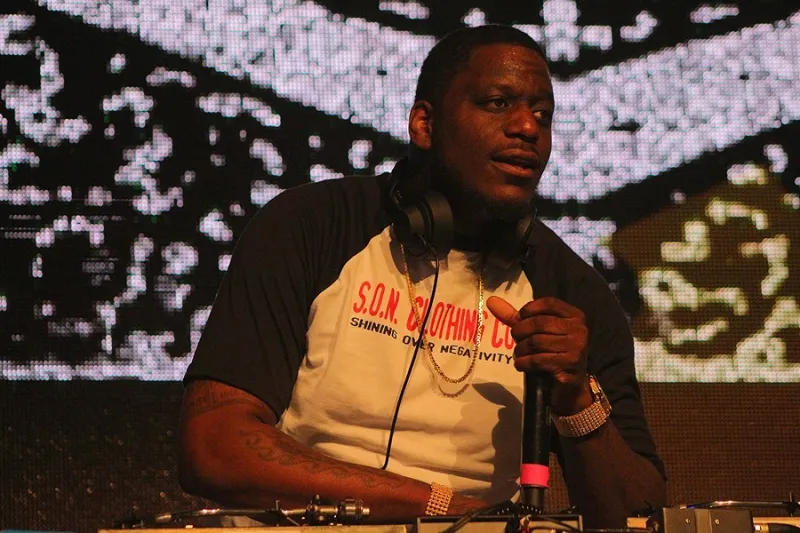
Photo: Khantact, CC BY-SA 4.0, via Wikimedia Commons
Walk into a US club or festival booth in 2026 and you are increasingly likely to see something missing: the laptop. No glowing waveform. No browser tab open to a streaming service. Just two or four standalone media players, a mixer, and a couple of USBs. The laptop-free DJ is not a throwback movement, and it is not a purity test. It is a practical response to what working DJs now value most: reliability, presence, and the kind of mixing that happens in your ears instead of on a screen.
The Gear Finally Caught Up
For years, going laptop-free meant accepting real compromises. Early standalone players were slow, limited, and fussy about file formats. That has changed. Modern media players from Pioneer DJ, Denon DJ, and others now handle large libraries, hot cues, loops, beat grids, and even stem-style controls without a computer attached. Exporting a Rekordbox or Engine DJ library to a USB drive is no longer a novelty. It is a standard workflow.
The reliability argument is simple. A laptop introduces a chain of potential failures: the computer itself, the operating system, the USB hub, the cable, the software license, the power supply. Any one of those can end a set. Standalone players are not indestructible, but they remove an entire layer of complexity. In a booth with bad power and a sticky floor, fewer moving parts is not a philosophical stance. It is risk management.
What You Gain When You Stop Watching
The first thing most DJs notice when they leave the laptop at home is how much they were looking down. Waveforms are comforting. They tell you exactly where the breakdown is, exactly how long the outro runs, exactly when the kick will drop. But they also pull your attention away from the room. Without a screen, you start counting bars in your head again. You feel phrasing in your shoulders. You hear the crowd before you see a meter.
That shift changes the way you mix. Transitions become less about lining up two visual shapes and more about timing a room. You learn to trust a cue point you set three weeks ago. You learn that muscle memory is real — the hand knows where the filter knob is before the brain catches up. And you learn to read a floor through peripheral vision: the way people turn, the way hands go up, the way a conversation at the bar suddenly ends.
There is also a showmanship benefit. A DJ looking up is a DJ the crowd can connect with. In the age of the fifteen-second clip, visible engagement matters. A performer buried in a laptop screen reads as distant, even when the mix is flawless.
The Cost of Going Screenless
None of this is free. The laptop still wins on certain tasks. Complex edits, last-minute requests, harmonic mixing with visual key tags, and very large libraries are easier with a screen. If your set depends on live remixing, acapella stacking, or pulling tracks from the internet mid-set, a laptop remains the more flexible tool.
The preparation burden also goes up. Without a screen, your cue points, loops, and playlists have to be built before you arrive. You need a clear system for naming crates and labeling USBs. You need backup drives. You need to know your library well enough that you can find the next track by muscle memory, not by typing into a search bar. The laptop-free set is often won or lost in the two hours before you leave the house.
A Practical Path, Not a Purge
The smartest approach is not to sell your laptop and burn your controller. It is to treat laptop-free performance as a skill you practice. Build a single USB-only set for a low-stakes gig. Export it correctly. Test it on club-standard gear. Set twice as many cue points as you think you need. Then play it and pay attention to what feels different.
Many DJs end up in a hybrid position: laptop for production and preparation, standalone players for performance. That is not a compromise. It is a mature workflow. The point is not to prove you can survive without a screen. The point is to choose the tool that keeps you in the room.
In 2026, the laptop-free wave is less about rejecting technology than about deciding where technology belongs. The best sets still sound like they were made by a person who was present. If leaving the computer at home helps you get there, that is not a trend. That is technique.