The Invisible Transition: How 1990s Radio Mix Shows Still Teach the Modern Club

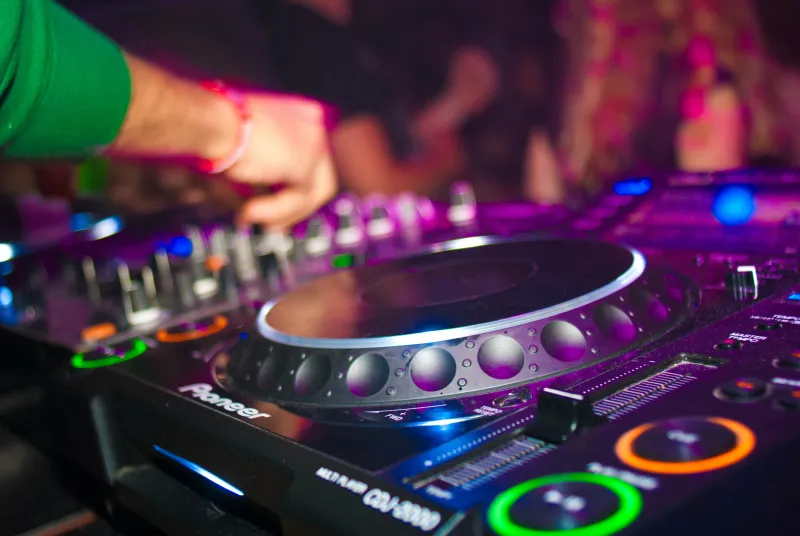
Photo by Photo by Christian Agbede on Unsplash on Unsplash
There was a time when a DJ's most important audience was not standing in front of the booth. They were driving, doing homework, cleaning the apartment, or lying in bed with the radio on. In the 1990s, mix shows on American radio turned the crossfade into a public craft. The DJ had no crowd to read, no lights to hide behind, and no visual drama to cover a clumsy transition. There was only the music and the listener's attention.
That constraint produced a discipline that modern club DJs can still learn from.
Before the Algorithm, There Was the Broadcast
In markets like New York, Chicago, Los Angeles, Detroit, and Miami, radio mix shows were a weekly appointment. A DJ or a team of DJs would take over a block of airtime and stitch together hip-hop, house, R&B, freestyle, dance, and whatever else fit the station's identity. The mixes were tightly wound. Segments were built around ads, station IDs, and the clock. There was no room for a 12-minute ambient detour unless the DJ had earned it.
For listeners, the mix show was discovery and craft at the same time. You might hear a record you had never encountered, but you heard it inside a flow. The DJ was not just presenting songs. They were arguing for a sequence. That argument had to make sense to someone who could not see what was happening.
The Discipline of the Invisible Blend
A radio crossfade has to work on its own. In a club, a DJ can use the room's energy, a lighting change, or a well-timed vocal to carry a transition. On the radio, the transition is exposed. If the blend is muddy, the listener hears mud. If the timing is off, the listener feels it. If the DJ leans on effects to cover a weak mix, it sounds like a cover-up.
Veterans of the format talk about the same priorities: clean levels, sensible EQ, and transitions that do not announce themselves. The ideal was not a blend that made the listener say, wow, what a transition. It was a blend that kept the listener from reaching for the dial. The craft was invisible because the result was continuous.
That is a useful corrective for club DJs in 2026. Modern gear makes almost any transition possible. Loops, stems, effects, and sync can smooth over a lot. But smoothing over is not the same as blending. The radio mix-show standard asks a harder question: does this transition actually serve the listener, or is it just showing off the machine?
Pacing for People in Cars
Radio mix shows also had to solve a pacing problem that club DJs face every weekend. The audience was not a single room with a single energy level. It was thousands of small rooms—cars, kitchens, bedrooms—each with its own attention span. The DJ had to build an arc that could hold someone who tuned in halfway through and someone who had been listening since the start.
That meant thinking in segments. A mix-show DJ might open with a familiar record, move into something fresher, pull the energy back for a vocal moment, then close the segment with a run of tracks that felt inevitable. The transitions were not just between songs. They were between moods.
Club DJs do something similar, but often with more room to roam. The radio format was tighter, and that tightness is worth studying. A 45-minute mix show could feel like a complete story. A four-hour club set can sometimes feel like a collection of good ideas waiting for an edit.
What Club DJs Can Steal
The first lesson is restraint. Radio mixers could not rely on a drop to reset the room every five minutes. They had to create momentum with selection and timing. The second is clarity. A blend that works on a car speaker has to be clean in the low end and readable in the mids. That is still a good test for any club mix.
The third lesson is respect for the listener's attention. Radio DJs knew that a transition was not a private conversation between the DJ and the gear. It was a public act. The same is true in a club, even if the crowd is louder and the lights are lower. People notice when a set stops flowing. They may not know why, but they feel it.
Finally, there is the art of the invisible transition. Not every blend needs to be a moment. Some of the best transitions are the ones nobody claps for because nobody noticed them. The set simply moves, and the room moves with it.
The Legacy Is in the Restraint
Most American radio mix shows are gone from the dial, but their influence is still in the way good DJs think. The format trained a generation to build sets for ears rather than eyes. It rewarded timing, taste, and the ability to make two records sound like they belonged together even when the listener had no idea what was coming next.
In 2026, club DJs have more tools than the radio pioneers ever did. That is not a problem. The problem is forgetting what the tools are for. A crossfade is not a special effect. It is a handoff. The radio mix-show DJs understood that better than almost anyone. The best modern club sets still carry that lesson: make the transition feel inevitable, then get out of the way.