Ten Thousand Bedrooms, Not Enough Booths: Solving America's Home Studio Bottleneck
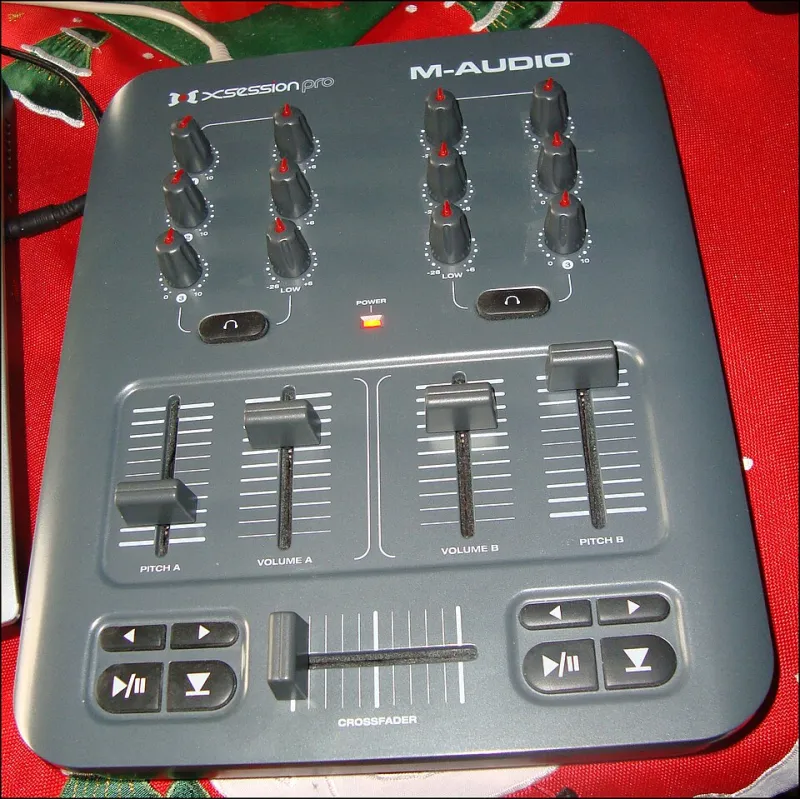
Photo: David J, CC BY 2.0, via Wikimedia Commons
The numbers don't get talked about enough. Since 2020, sales of DJ controllers and entry-level production gear have climbed year over year, used marketplaces are flooded with Pioneer units at prices that would've been unthinkable a decade ago, and music software subscriptions have become a normal household line item. Somewhere in the neighborhood of millions of Americans now own equipment capable of beatmatching two songs together. Most of them have never played for a stranger.
This isn't a hobbyist curiosity. It's the biggest supply-demand mismatch in American dance music, and understanding it tells you a lot about where the next generation of DJs will actually come from.
How We Got Here: The Great Gear Migration
The story starts with a lockdown and a stimulus check, but it doesn't end there. When venues went dark in 2020, two things happened simultaneously. First, people stuck at home with disposable income bought gear — controllers, monitors, headphones, the whole starter kit. Second, the knowledge barrier collapsed. YouTube tutorials, TikTok breakdowns, and Discord communities turned what used to be apprenticeship knowledge into free, on-demand education.
The result is a generation of DJs whose technical foundation is often better than their club-trained predecessors. The average bedroom DJ today can beatmatch by ear, understand harmonic mixing, edit tracks in a DAW, and record a clean mix. What they can't do is the only thing that matters to a promoter: prove they can hold a room.
The Bottleneck, Mapped
Here's the brutal arithmetic. A city might have fifty new serious bedroom DJs a year. It might have two venues with open-deck nights. Those nights might have ten slots each, and the same twenty regulars tend to fill them. Do that math and you'll see why so much talent stays trapped between four walls.
The bottleneck isn't just about slots — it's about the ladder itself disappearing. The old path went: bedroom, house party, dive bar, club. Each rung gave you a different skill. House parties taught you to read a drunk room. Dive bars taught you to play through a bad system to people who didn't come for you. Clubs taught you endurance. Cut off the bottom rungs — and gentrification, noise ordinances, and rising rents have cut off plenty — and the whole ladder stops working.
The Scene-Builders Building Ladders
Which brings us to the most interesting part of the story: the people solving this aren't waiting for the industry to fix it. Around the country, a loose network of DIY infrastructure has emerged.
In Los Angeles and New York, collectives run open decks as actual schools — structured feedback, recorded sets, a WhatsApp group that functions as a referral network. In smaller cities like Columbus and Richmond, warehouse-adjacent spaces host daytime workshops where bedroom DJs bring their own controllers and learn the unwritten rules: how to warm up, how to read a floor, how to take an L gracefully.
Then there's the streaming workaround. A number of up-and-coming DJs have essentially built their own rooms online — live-streamed sets from their bedrooms that function as both practice and proof. It's not the same as a dance floor, but it's a feedback loop, and feedback loops are what the bottleneck actually starves people of.
What to Do If You're One of the Millions
If the bedroom is where you are right now, the practical playbook is shorter than you'd think:
- Play for humans, any humans. A friend's birthday, a backyard, a coffee shop open mic. The skill gap between bedroom and booth closes fastest when there are bodies in the room.
- Record everything and listen back ruthlessly. The bedroom's advantage is privacy; use it to develop the self-critique that open decks won't give you.
- Find or build the ladder in your city. If there's no open decks night, that's not a dead end — it's a vacancy. The DJs who run the nights are the DJs who get first pick of the slots.
America has never had more people who know how to DJ. What it's lacked is places for them to learn the rest of the job. The bedroom boom built the talent. The next few years will decide who builds the rooms.