Wired to the Beat: The Hidden Psychology Behind How DJs Control What You Feel
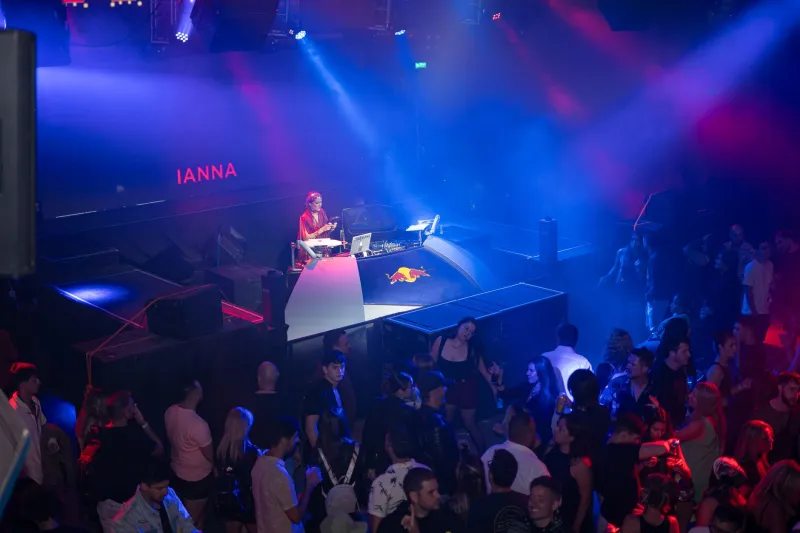
You're two hours deep into a Saturday night. The room is locked in, bodies moving in sync, and you have absolutely no idea why you feel the way you do. You didn't choose this journey. Someone else did — and they did it so smoothly you never noticed the hand guiding you.
That's not an accident. That's craft.
The best DJs in the game aren't just matching beats. They're running what amounts to a live psychological operation, using transition techniques as precision tools to push and pull a crowd's emotional state in real time. And the science behind it is way more fascinating than most people — including a lot of DJs — ever stop to consider.
Your Brain on a Crossfade
The human brain is a prediction machine. It constantly anticipates what's coming next based on patterns it already knows. Music exploits this relentlessly — and DJs exploit music.
Dr. Nina Hargrove, a cognitive neuroscientist at the University of Michigan who studies auditory processing and emotional response, puts it plainly: "When a familiar sonic pattern shifts gradually, the brain doesn't register it as a disruption. It updates its prediction model without triggering an alarm. That's why a well-executed crossfade can move someone from a state of moderate arousal to high excitement without them consciously registering the change."
In other words, a clean transition isn't just aesthetically pleasing — it's neurologically deceptive, in the best possible way. The crowd's brain never gets the jarring signal that says something changed. It just finds itself somewhere new.
Contrast that with a hard cut or a train wreck mix. Sudden, unexpected sonic shifts activate what researchers call the orienting response — a neurological alarm that pulls attention away from the body and toward conscious analysis. The moment someone starts thinking about the music is the moment they stop feeling it. The floor dies a little.
The Filter as an Emotional Volume Knob
Tempo and key matching get all the glory in DJ education, but filters might be the most underappreciated emotional tool in the entire toolkit.
A high-pass filter slowly cutting the low end out of a track does something specific to human perception: it creates a sense of anticipation and mild tension. Bass frequencies are physically felt as much as heard — they activate the body's low-frequency receptors and create a grounded, settled feeling. Strip that away gradually and the crowd starts to feel, unconsciously, like something is missing. Like they're waiting.
Then you bring it back.
Veteran Chicago house DJ Marcus "Reef" Delacroix — who's been holding down residencies and warehouse events since the late '90s — describes his filter work almost like breathing. "I think of the low end as the crowd's heartbeat. When I pull it out, I'm making their chest feel hollow. When I slam it back in, it's like the room exhales together. You can actually see it happen — the whole floor drops into the beat at the same moment."
That collective physical response isn't metaphorical. Research on entrainment — the synchronization of biological rhythms to external stimuli — shows that bass frequencies at club volumes can literally synchronize heart rates and movement patterns across a crowd. A DJ manipulating the low end is, in a very real sense, manipulating physiology.
Tempo Shifts and the Emotional Gear Change
BPM is the DJ's most obvious lever, but the way tempo transitions are handled determines whether they feel like a natural evolution or a jarring gear change.
Hargrove explains that the brain processes tempo changes relative to baseline expectations. "If you've been listening to 124 BPM for 20 minutes, your nervous system has calibrated to that pace. A jump to 130 BPM feels significant — almost aggressive. But if you nudge it up one or two BPM over several tracks, the body adapts without the conscious mind noticing. You arrive at 130 feeling energized rather than assaulted."
This is why elite DJs talk about "building" a room rather than "switching" it. The emotional arc of a great set is less like flipping channels and more like slowly turning a dial — with occasional, intentional jolts thrown in when the DJ decides the crowd is ready to be surprised.
Delacroix calls those moments "the agreement." "By the time I'm ready to really push the tempo, the crowd has already told me they're there. The energy in the room — the way people are moving, how loud it is, whether they're facing the booth — all of that is data. The tempo shift is just me confirming what they already want."
The Emotional Architecture of a Full Set
Zoom out far enough and a great DJ set has the emotional structure of a well-written film. There's exposition, rising action, climax, and resolution. The tools change — track selection, EQ, filter sweeps, reverb throws, tempo — but the intent stays consistent: guide the audience through a complete emotional experience.
Dr. Hargrove points to the concept of emotional valence and arousal as the underlying framework. "Music affects us on two axes — how positive or negative it feels, and how energetically activating it is. A skilled DJ is essentially navigating a two-dimensional emotional map in real time, using their tools to move the audience from one quadrant to another in a way that feels inevitable rather than forced."
That navigation is what separates a DJ who plays good music from one who creates an unforgettable night. Anyone can queue up a playlist of bangers. The craft is in the journey between them.
What This Means If You're Behind the Decks
For working DJs looking to level up, the takeaway here isn't to start treating the dance floor like a psychology experiment. It's to recognize that your technical decisions are never emotionally neutral. Every crossfade, every filter sweep, every tempo nudge is doing something to the people in front of you — whether you intend it or not.
The DJs who understand that tend to be the ones who build real followings. Not because they play the best tracks, but because their crowds walk away having felt something they can't quite articulate. That feeling is loyalty. And it starts with understanding that the crossfade isn't just a technical tool.
It's a conversation with the room — one your audience doesn't even know they're having.