Flip the Record: How Hunting Obscure Cuts Turns Decent DJs Into Ones Nobody Forgets
Picture this: you're on a packed dancefloor somewhere in Chicago, Detroit, or maybe a basement party in Brooklyn. The DJ before you played all the right records — the ones Beatport flagged as top sellers this week, the edits everyone's been sharing on Instagram, the remix that's been in every set for the past three months. The crowd moved. They nodded. They were fine.
Then you step up and drop something nobody in that room has ever heard. A 1987 boogie funk B-side pressed in a run of 500 copies for a regional distributor in Memphis. The kind of record that doesn't have a Wikipedia page, doesn't show up in a Spotify playlist, and definitely didn't get a write-up on any blog. The room doesn't just move — it shifts. People look up from their phones. Someone grabs a friend's arm. The energy changes in a way that's almost impossible to manufacture with familiar music.
That's the power of the deep cut. And right now, in 2025, it's rarer and more valuable than ever.
The Algorithm Doesn't Dig for You
Streaming has done a lot of genuinely great things for music discovery. It's connected listeners to genres they never would have stumbled into, made global sounds accessible overnight, and lowered the barrier for artists releasing music independently. Nobody's arguing against any of that.
But for DJs, there's a catch. When everyone has access to the same infinite library, the library stops being an advantage. Spotify's editorial playlists, Beatport's trending charts, SoundCloud's algorithm — these tools surface the same music to hundreds of thousands of DJs simultaneously. The result is a kind of sonic homogenization that any regular clubgoer in a major US city has already noticed, even if they don't have the language to describe it.
When a track becomes the track, it gets played everywhere — at the warm-up, at the peak, at the after-party, in the DJ mix someone posts on Tuesday morning. Familiarity breeds comfort, sure. But it also breeds that glazed, been-here-before feeling that flattens the energy in a room.
The DJs who consistently sidestep this trap aren't necessarily more technically gifted than their peers. They're just more obsessed. They've committed to finding music that the algorithm genuinely cannot surface — because it was never digitized, never uploaded, or simply never got enough plays to register.
What "Deep Digging" Actually Means in Practice
The phrase "crate digging" gets thrown around a lot, but it's worth being specific about what serious hunters are actually looking for.
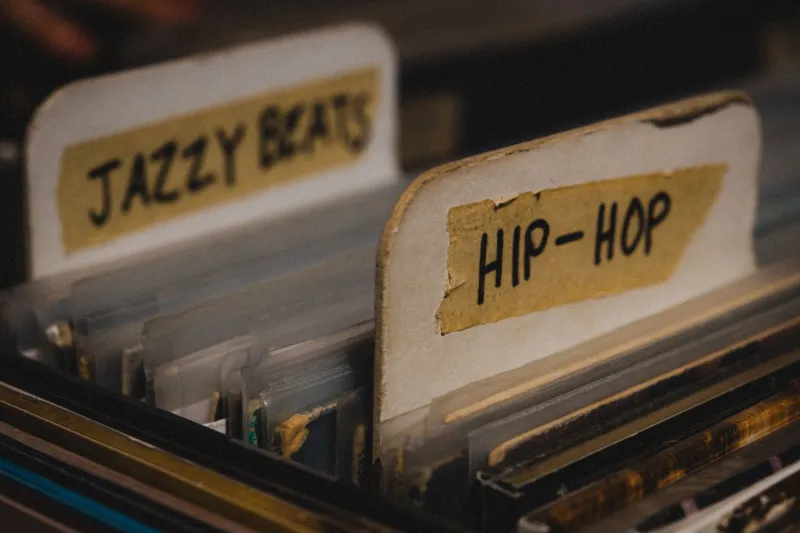
B-sides are the obvious entry point. Record labels used to press secondary tracks on the flip side of singles — sometimes throwaways, sometimes genuine gems that just didn't fit the commercial narrative of the A-side. These tracks were never meant to be hits. Nobody promoted them. Consequently, they carry zero cultural baggage when you drop them in a set. The crowd can't anticipate the drop because they've never heard the build.
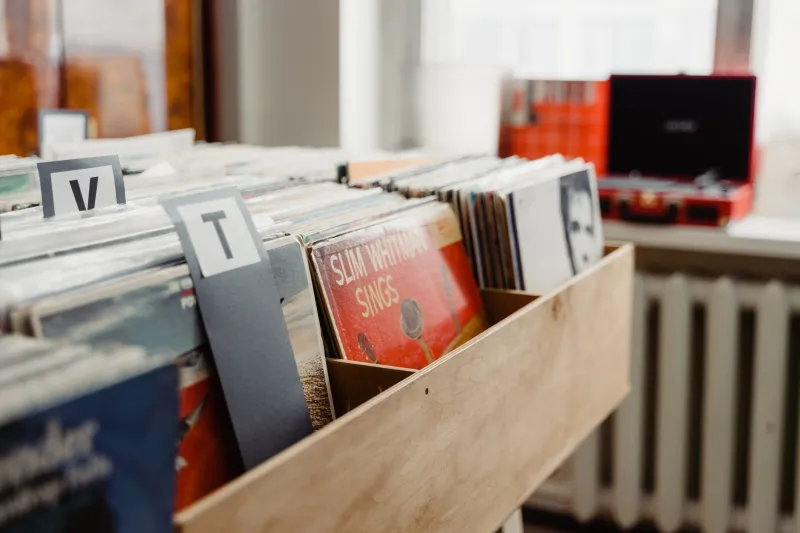
Regional pressings are another goldmine. American music history is full of locally distributed records that never made it past a specific state or city. Small soul labels out of the South, regional disco imprints from the Midwest, Tejano crossover experiments from Texas labels in the '80s — this stuff exists in physical form in thrift stores, estate sales, and record fairs, and almost none of it has been digitized in any meaningful way. Finding it requires showing up in person, flipping through bins, and being willing to buy something based on a hunch.
Forgotten album cuts occupy a slightly different space. These are tracks from artists you might recognize, buried on the third or fourth side of a double LP, never released as a single, never licensed for a compilation. They're accessible if you know the catalog well enough to look — but most people don't.
The Psychology of the Unfamiliar
There's actual science behind why a record nobody knows hits differently than one everybody does. Psychologists call it the "peak-end rule" and the related concept of "expectation violation" — when something surprises us in a positive way, our brains encode the experience more vividly than when our expectations are simply met.
On a dancefloor, a track everyone knows triggers a kind of autopilot response. People know when the drop is coming. They know the breakdown. Their bodies react, but their minds are already ahead of the music. An unfamiliar record short-circuits that autopilot. The crowd has to actually listen. They're discovering something in real time, and the DJ is the person who brought them there. That's a fundamentally different relationship than being the person who played the song they already love.
Veteran diggers talk about this in terms of "ownership" — not legal ownership of the music, but the sense that a particular track belongs to your sets, your sound, your identity as a DJ. When you're playing records nobody else has, you're not competing on the same playing field as everyone else. You've opted out of the comparison entirely.
Where to Start Looking
If you've spent most of your career building libraries through streaming and digital stores, shifting toward physical digging can feel overwhelming. A few practical starting points:
Record fairs and swap meets remain the single best hunting ground in most US cities. Events like the Brooklyn Flea Record Fair, the Randolph Street Market in Chicago, or any number of regional events hosted by local shops bring together dealers and private collectors who are often moving inventory they haven't had time to research. That's your window.
Discogs rabbit holes work differently than browsing Beatport. Start with an artist or label you know, then follow the links sideways — related artists, labels that distributed similar music in the same era, session musicians who appeared on multiple records. Discogs lets you filter by pressing country and year, which means you can specifically hunt for regional US pressings from specific decades.
Thrift stores in mid-size American cities are dramatically underrated. Places like Goodwill or Salvation Army in smaller metros — think Tulsa, Albuquerque, Richmond — regularly receive donated record collections from estates and moving sales. The competition is lower and the finds can be genuinely wild.
Library sales and university surplus events occasionally surface academic and archival collections that include promotional copies, regional releases, and one-offs that never entered general circulation.
The Tension Worth Sitting With
Here's the honest part: deep digging is slow, expensive, and sometimes frustrating. You'll spend an afternoon flipping through records and come home with two things worth playing. You'll pay $40 for something that turns out to be unlistenable. You'll find an incredible track and then spend weeks figuring out how to integrate it into a set without it feeling random.
None of that is a reason to skip the process. It's the reason the process creates value. The records that are easy to find are easy for everyone to find. The ones that require actual effort, actual presence, actual obsession — those are the ones that make a DJ's identity specific. And specific is exactly what the algorithm can't replicate.
The best DJs in the country aren't just music players. They're archivists, researchers, and advocates for sounds that would otherwise disappear. When you drop a forgotten 1979 soul-funk record in the middle of a techno-leaning set and the room gets it — that's not an accident. That's years of digging paying off in a single moment.
Flip the record. Start there.