Dig Deeper: The Modern Producer's Playbook for Finding Samples, Clearing Them, and Keeping the Lawyers Away
Dig Deeper: The Modern Producer's Playbook for Finding Samples, Clearing Them, and Keeping the Lawyers Away
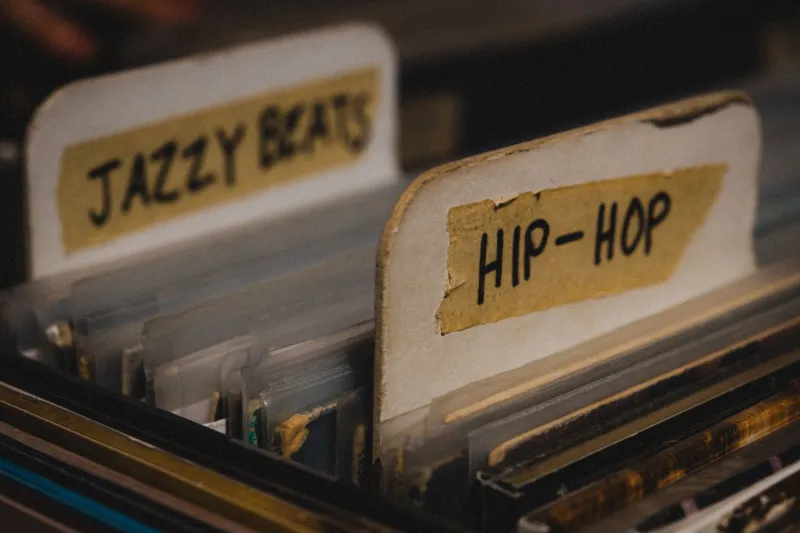
There's something almost ritualistic about flipping through a crate of vinyl. That satisfying thwack of cardboard sleeves, the faded cover art, the little electric jolt when you pull a record you've never seen before. Sampling has been at the heart of electronic music and hip-hop production for decades, and in 2025 it's not going anywhere — but the rules of the game have gotten a lot more complicated. Between aggressive rights holders, AI-powered content detection, and a music industry that's more litigious than ever, you need to know what you're doing before that dusty loop hits your DAW.
This isn't a lecture. Think of it as a field guide — where to dig, how to flip what you find, and how to keep your releases alive on streaming platforms without a takedown notice ruining your week.
Where to Actually Find the Good Stuff
Let's start with the obvious: Discogs is still the gold standard for sourcing physical records online. The database is massive, the seller ratings are reliable, and if you know how to filter by genre, pressing region, and price, you can find genuinely obscure material without leaving your apartment. Lean into the weird stuff — regional pressings from the '60s and '70s, international funk and soul records, private press gospel, Latin jazz that never made it to CD. These are the veins most producers haven't fully mined yet.
But don't sleep on the physical hustle either. Record fairs are thriving again across the US. Cities like Chicago, Los Angeles, New York, and Austin host regular events where dealers bring boxes of stuff that never gets listed online. The Randolph Street Market in Chicago, the Alley Cat record fair in LA, and the Brooklyn Flea's vinyl vendors are all worth building into your routine. Smaller regional fairs in college towns can be even better — less competition, more oddities, and dealers who are sometimes willing to talk price.
Thrift stores in suburban areas, particularly Goodwill locations in cities with large immigrant communities, are still criminally underrated. You're not always going to find something usable, but when you do, you paid $1.99 for it.
On the digital side, Internet Archive (archive.org) hosts a staggering collection of out-of-print and public domain recordings. The 78rpm collection alone is a goldmine for anyone producing soul, jazz-influenced beats, or anything with a vintage texture. Bandcamp is another underused source — independent artists sometimes release music under Creative Commons licenses that explicitly allow sampling with attribution.
And then there's the niche holy grail: library music. Labels like KPM, Bruton, Sonoton, and DeWolfe produced thousands of records in the '60s through '80s specifically for TV and film use. The grooves are often wild — funky, cinematic, strange. Physical copies show up on Discogs and at fairs, but digitized versions of many catalog titles are also floating around in dedicated collector communities and Discord servers built around production music.
Understanding the Legal Reality (Without the Law Degree)
Here's where a lot of producers either tune out or panic. Don't do either. The law around sampling is genuinely navigable if you understand the basics.
Sampling without clearance is infringement. That's the baseline. When you lift audio directly from a recording, you're dealing with two separate copyrights: the composition (the underlying song — melody, lyrics, chord structure) and the master recording (the specific recorded performance). Both have owners. Both need to be cleared if you want to release the sample commercially.
Clearance means you've gotten permission — usually in writing, often with an upfront fee and/or a royalty split — from both the master owner (typically a label) and the publishing rights holder (typically a publisher or the songwriter themselves). For major label material, this can cost thousands of dollars and take months. For independent or obscure recordings, it's sometimes surprisingly accessible — a direct email to a small label or an estate can be enough.
Interpolation is a workaround a lot of producers use: instead of sampling the actual recording, you re-record the musical element yourself (or hire musicians to do it). This eliminates the master recording copyright issue entirely. You still need to clear the composition if you're replicating the melody or lyrics closely enough to be recognizable, but you've cut your legal exposure in half. This is how a huge number of modern pop and hip-hop records handle familiar musical references.
Fair use is real but wildly misunderstood. It's a legal defense, not a permission slip. You can't just declare something fair use and post it — a court decides that after the fact, based on factors like how transformative your use is, how much of the original you used, and whether your version affects the market for the original. Relying on fair use as your production strategy is a gamble most working producers can't afford to take.
One more thing: public domain. In the US, recordings made before 1928 are now in the public domain under the Music Modernization Act. Compositions published before 1928 are also generally free and clear. If you're working with genuinely old material, this is worth researching — it can open up a lot of creative territory with zero legal exposure.
Workflow Tips for Flipping Samples Cleanly
Finding a sample is the beginning, not the end. Here's how to work with it in a way that both sounds good and gives you options down the road.
Chop and reconstruct. The more you rearrange, pitch-shift, time-stretch, and layer a sample, the more transformative your use becomes — and the harder it is for automated detection systems to flag it. More importantly, it just sounds better. A two-bar loop played straight is boring. Chop it into eight pieces and rebuild a new rhythm from the fragments.
Change the key and tempo. Pitch your sample up or down a few semitones and adjust the BPM to fit your track. This alone won't clear a legal issue, but it changes the sonic fingerprint enough to avoid a lot of automated Content ID flags on platforms like YouTube and TikTok.
Layer your own elements over it. Add live drums, synth bass, or re-recorded melodic parts. The more original material you introduce, the more the sample functions as texture rather than the core of the track — and the stronger your claim to originality becomes.
Document your sources. Keep a simple spreadsheet or note file logging where every sample came from: the record label, catalog number, release year, and any information you have about the rights holder. If you ever need to pursue clearance or defend yourself, having that documentation ready is invaluable.
Consider sample-clearance services. Companies like Tracklib offer licensed samples from their catalog with built-in clearance — you pay a fee upfront and get a license to use the recording commercially. The selection is curated, but it removes the legal uncertainty entirely for those specific sounds.
The Bottom Line
Sampling in 2025 is still one of the most exciting creative acts in music production. The sources are better than ever, the tools for flipping samples are more powerful than they've ever been, and the culture of digging — physical and digital — is genuinely alive. But the legal landscape demands respect. Understand what you're working with, know when to clear and when to interpolate, and build your workflow around protecting the music you make. The crate is deep. Dig smart.