Noon to Nobody: How Smart DJs Turn the Throwaway Festival Slot Into a Career Launchpad
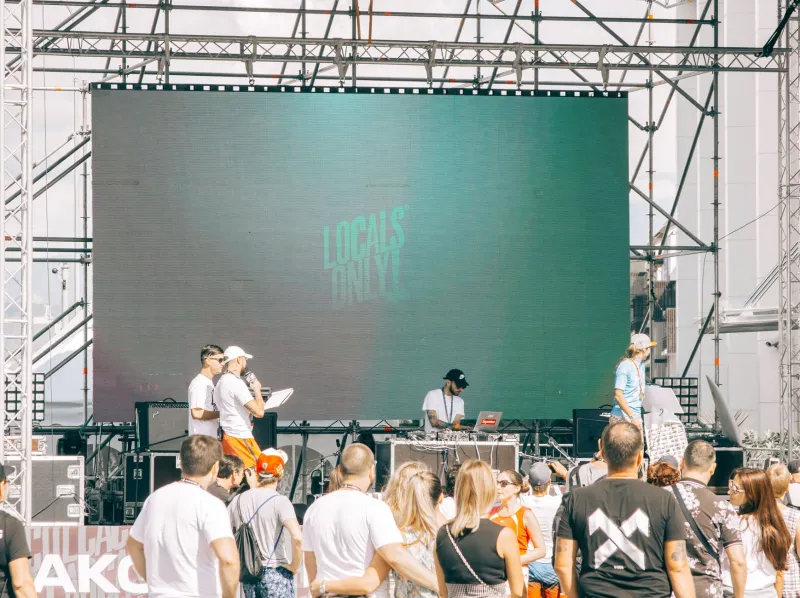
You got the booking. Your name is on the poster — small print, sure, but it's there. Then you pull up the full schedule and your stomach drops. Saturday. 1:45pm. Stage Two. You're sandwiched between a duo nobody's heard of and a three-hour gap before anyone the crowd actually came to see.
Welcome to the afternoon graveyard shift.
Every major festival in America — from Lollapalooza to Electric Forest to some dusty regional thing in a field outside of Tulsa — has them. Those slots that exist mostly to fill the schedule, keep the stages warm, and give early arrivals something to half-listen to while they figure out where to get food. The crowd is sparse. The sun is brutal. Half the people within earshot are sitting on blankets, hats pulled low, not exactly locked in.
And yet — some of the most pivotal moments in DJ careers have happened right here, in this exact awkward window. The question is whether you know how to use it.
Reframe the Room (Or the Field)
The first mental shift you have to make is letting go of what you wish the slot was and working with what it actually is. DJs who struggle in these moments are usually the ones who show up expecting a peak-hour crowd and then get visibly thrown when the energy doesn't match their expectations. That disconnect reads. The audience feels it even before you play a single track.
The DJs who thrive? They walk into that half-empty field and treat it like an opportunity, not an apology. Because here's the thing about a sparse afternoon crowd: they're not hostile. They're not drunk and rowdy and hard to read. They're curious, a little loose, and — crucially — they haven't made up their minds about you yet. That's actually a rare position to be in.
You're not fighting for attention against the headliner's hype. You're building something from scratch, which is a skill set all its own.
Set Construction for the Long Burn
Afternoon festival sets demand a completely different architecture than your Friday night club set. Forget the idea of an explosive opener. That move doesn't land when people are still finding their friends and locating the water stations.
Instead, think in terms of a slow seduction. Start warmer and more melodic than you think you need to. Give people a reason to drift toward the stage without feeling like they're committing to anything. The crowd at 2pm is a crowd of wanderers — your job is to become the gravitational pull that makes them stop walking.
Layering is everything here. Build your energy in longer arcs. Where a nightclub set might climb and release every eight to ten minutes, an afternoon festival set rewards patience. Take fifteen, twenty minutes to establish a vibe before you start asking more of the room. Let the groove breathe. Give people time to actually hear what you're doing.
The other thing that works surprisingly well in these slots: familiarity with an edge. Not obvious crowd-pleasers, but tracks that feel almost recognizable — records that hit some emotional receptor without being the thing everyone's heard a thousand times. You want the person eating a breakfast burrito twenty yards away to look up and think, wait, what is this? That's your in.
The Energy Management Game
Physically and mentally, afternoon slots are a different kind of grind. You're performing in direct sunlight, often on stages with questionable monitoring, in front of an audience that's still metabolizing their first beer. It takes a certain kind of stamina that has nothing to do with high BPMs.
A lot of working DJs talk about treating these sets like a workout warm-up — not coasting, but also not blowing everything in the first twenty minutes. Pacing yourself emotionally matters as much as pacing the music. If you're visibly bored or disengaged, that energy radiates outward. But if you're genuinely locked into the craft — head down, working the mix, reacting to what's happening in front of you — people notice that too.
One practical move that gets underrated: interact with the actual humans who are paying attention. Make eye contact. Acknowledge the small cluster of people who've gathered close to the stage. Those twenty people are your early adopters. Play for them like they're two hundred. They'll feel it, and so will the people watching from further back.
Why These Slots Build Better DJs
Here's the uncomfortable truth that nobody really talks about: headlining a peak slot is, in some ways, easier. The crowd is already primed. The energy is already there. Your job is mostly not to mess it up.
But the afternoon slot? That's where you actually learn to be a DJ.
You learn how to read a crowd that isn't giving you much feedback. You learn how to construct a set that earns its way forward rather than relying on momentum that was handed to you. You learn how to hold your composure when the conditions are imperfect — and in this industry, conditions are always imperfect at some point.
The DJs who've made the jump from secondary stages to main stage bookings will almost universally tell you that those early, awkward slots were where they figured out who they actually were behind the decks. Not the highlight reels, not the packed rooms — the empty fields and the brutal sun and the crowd that wasn't sure yet whether to care.
Turning the Slot Into a Moment
There's a strategic layer to this beyond just surviving the set. Festival afternoon slots are often attended by other industry people — booking agents grabbing lunch, label reps walking the grounds, other artists doing their own reconnaissance. The main stage headliners aren't the ones being watched and evaluated all day. You are.
Record your set. Always. Even if the audio quality isn't perfect, having documentation of how you handled a challenging slot is valuable. A well-crafted mix from an unpredictable environment says more about your skills than a flawless recording from a perfectly calibrated club booth.
And if you can move even a portion of that sparse afternoon crowd — if you can get a handful of people dancing in the grass who had no intention of dancing — that's a story. That's something you can talk about, share, and build on.
The festival circuit in America is competitive in ways that can feel discouraging, especially when you're watching your slot from the bottom of the bill. But the graveyard shift has a history of making careers, precisely because so few people know what to do with it.
Show up. Read the room. Play the long game. The crossfade from opening act to headliner starts somewhere — and more often than you'd think, it starts right here, in the middle of a Saturday afternoon, in front of a crowd that hasn't decided yet whether they care.
That's your window. Take it.