One Room, Every Week: Why the Smartest DJs in America Are Betting on the Residency
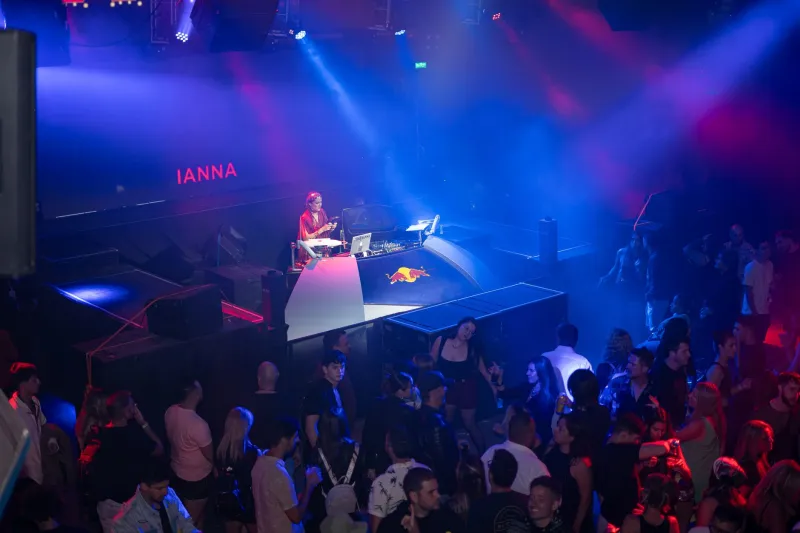
There's a particular kind of energy that fills a room when the crowd already knows who's behind the decks before they even walk through the door. They're not there because an algorithm surfaced your name on a festival lineup. They're there because you are there — same time, same place, week after week. That's the residency, and despite everything the modern DJ circuit tells you about spreading your name across as many cities as possible, it might still be the single most powerful career move you can make.
The one-off booking economy has never been louder. Instagram metrics, SoundCloud plays, and Boiler Room sets have made it easier than ever to land a random Friday night slot in a city you've never visited. But ask yourself this: when the night ends and the crowd scatters, what did you actually build? A memory, maybe. A handful of new followers, if you're lucky. Compare that to a DJ who's been holding down a Tuesday night at the same Chicago basement bar for two years straight. They've built a community.
The Legends Already Proved It
The residency isn't a new idea — it's actually the original blueprint. Larry Heard, Frankie Knuckles, and Ron Hardy didn't become legends because they were everywhere at once. They became legends because they were somewhere every single week. The Warehouse, the Music Box, the Power Plant — these weren't just venues, they were laboratories. Each week was another experiment: a new record dropped into a familiar context, a crowd trained to trust where the night was headed.
Same story on the coasts. Derrick May and Juan Atkins were building Detroit's identity through consistent presence. In New York, Larry Levan's residency at Paradise Garage became so synonymous with his artistry that the room itself became part of the mythology. The physical space shaped the music, and the music shaped the crowd. That feedback loop is only possible when you keep showing up.
Fast forward to more recent history and you'll find the same principle at work. Residents like Honey Dijon, Peggy Gou, and Dixon all built serious credibility through extended runs at specific clubs before the international circuit came calling. The residency was the launchpad, not the consolation prize.
What a Residency Actually Does for Your Career
Let's get practical. When you play a room every week, a few things happen that simply can't be replicated by touring.
Your sound gets sharper. You're not tailoring a set to impress a crowd that might never see you again. You're developing a musical conversation with people who remember what you played three months ago. That pressure — the good kind — pushes you to dig deeper, take more risks, and ultimately develop a more distinctive identity behind the decks.
The crowd becomes yours. There's a loyalty that forms between a resident DJ and their regulars that no headliner slot can manufacture. These people show up on a rainy Wednesday because you're there. They bring their friends. They become your street team, your most vocal advocates, and eventually the core of something that looks a lot like a fanbase.
You learn the room. Every venue has its quirks — the way the bass hits differently near the bar, the crowd's energy dip around 1 a.m., the tracks that consistently pull people back to the floor. A touring DJ gets one night to figure all of that out. A resident has months. That knowledge translates into tighter, more intentional sets that feel effortless to the audience even when they're anything but.
The New Class of American Residents
Across the US right now, a quiet movement is happening. DJs who could probably be chasing more bookings are instead choosing depth over breadth.
In Brooklyn, selectors holding down nights at spots like Nowadays and Good Room are developing cult followings that rival the reach of DJs playing three times as many shows. In Los Angeles, the underground warehouse circuit has its own class of dedicated residents who've turned monthly events into institutions. Austin, Detroit, Atlanta — every city with a real dance music culture has a version of this story.
What these DJs share is a willingness to think long-term. They're not measuring success by how many cities they played last quarter. They're measuring it by how deep the crowd goes when they drop something unexpected, and whether the room trusts them enough to follow.
How to Land a Residency in 2025
If this sounds like the move you want to make, here's how to actually get there.
Start by identifying the right room. Don't aim for the biggest venue in your city. Aim for the one where the crowd already aligns with your sound. A smaller room with a loyal audience is infinitely more valuable than a large one where you're just filling space.
Build a relationship before you pitch. Go to the venue. Talk to the promoters, the bar staff, the regulars. Understand what the room needs before you walk in asking for something. When you do make your case, you're not a stranger — you're someone who clearly gives a damn about the space.
Come with a concept. Venues don't just book DJs for residencies, they book nights. What's the theme? What's the vibe? What makes your Tuesday different from every other Tuesday? A strong concept makes the pitch easier and gives the venue something to market.
Negotiate smart. Residency pay is often lower per night than one-off bookings, and that's fine — the value is in the long game. But make sure you're getting something beyond the door: promotion support, creative control over the lineup, maybe a cut of the bar on strong nights. Know your worth and don't undersell the consistency you're bringing to their calendar.
Show up and evolve. The fastest way to kill a residency is to play the same set every week. Keep digging, keep surprising, keep the room guessing just enough. The crowd should always feel like they're part of something that's still becoming.
The Long Game Always Wins
The DJ circuit in 2025 is noisier than it's ever been. More DJs, more platforms, more ways to get your name in front of people — and paradoxically, more ways to get lost in the shuffle. The residency cuts through that noise because it's built on something no algorithm can replicate: genuine, repeated human connection.
The crossfade between where you are and where you want to be as a DJ doesn't always happen on a festival stage or in a viral mix. Sometimes it happens in a sweaty basement room at midnight, playing for two hundred people who already know your name — and showing up again next week to do it all over again.