You're Not a Jukebox: Turning Crowd Requests Into Set Intelligence

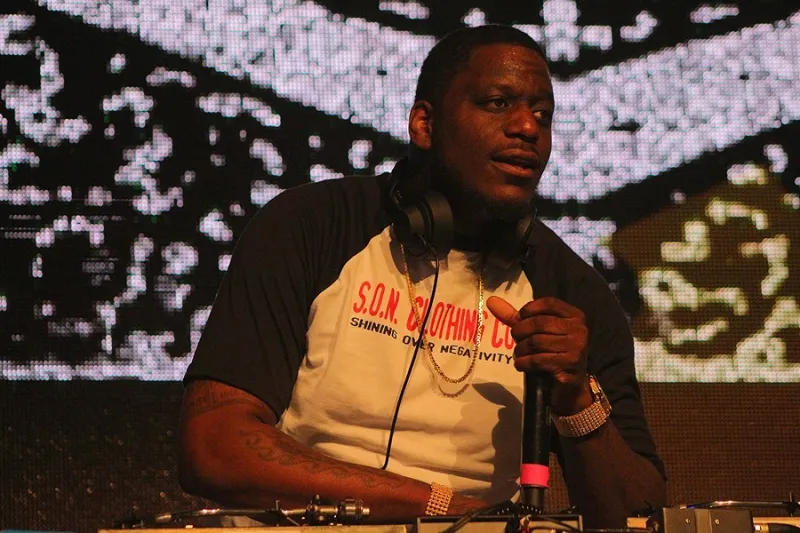
Photo: DJ VIRGIN, CC BY 3.0, via Wikimedia Commons
Every working DJ has a request story. The guy who asks for the same song four times in ninety minutes. The bride who wants a track that would clear the floor. The stranger who leans over the booth, points at your headphones, and says, play something good. Requests are the least glamorous part of the job, and the most revealing. They are not a test of your obedience. They are a stream of data about what the room thinks it wants.
The mistake is treating requests as either commands or insults. They are neither. A request is a person telling you, in the only language they have, what would make their night better. Sometimes they are right. Sometimes they are spectacularly wrong. Your job is not to obey or refuse. Your job is to translate.
The Request Is Data, Not a Demand
When someone asks for a song, they are often asking for a feeling. They want the nostalgia of a track they loved in high school. They want the peak moment they remember from a festival. They want to hear something that proves you understand the room. The specific song is just the vehicle.
That is why the same request can mean different things at different hours. At 10 p.m., a request for a big pop anthem might be a sign that the room is still warming up and needs familiarity. At 1 a.m., the same request might be a sign that someone is tired and wants a singalong. The song is identical. The need is not.
Smart DJs listen for patterns. If three people ask for the same artist in twenty minutes, that is not a coincidence. It is a signal that the room has a shared reference point you are not using. You do not have to play the exact song. You can play the lane it represents. A request for a certain era of hip-hop might be a request for a certain tempo, a certain energy, a certain kind of crowd participation. Read the pattern, not just the title.
The Three-Request Rule
One request is a person. Three requests for the same thing is a room. Somewhere between those two points is a decision. If multiple people independently ask for the same track or the same genre, it is worth asking whether your set is missing something obvious. That does not mean you have to pivot completely. It means you have a responsibility to check the temperature.
The three-request rule is not scientific. It is a habit. When the same idea keeps arriving at the booth, treat it as a hypothesis. Test it with one track. If the floor responds, you have learned something. If it does not, you have learned something else. Either way, you are making a decision instead of just absorbing noise.
Booth Etiquette and the Art of the Deflection
Requests also test your people skills. The DJ who snaps at every request is not protecting the set. They are building a reputation. The DJ who says yes to everything is not serving the room. They are serving the loudest person in it.
The middle path is simple and unglamorous: be polite, be brief, and be honest. You can say, I will see what I can do. You can say, that does not fit where I am right now, but thank you. You can point to a request sign, a QR code, or a piece of paper. You can acknowledge the person without committing to the song. Most people just want to be heard. A little eye contact and a nod go a long way.
What you should not do is let someone reach into your booth. Physical boundaries matter. Drinks near the mixer matter. A request that turns into a demand that turns into a confrontation is a security issue, not a musical one. Keep the interaction short and keep your hands on your gear.
When to Say Yes
There are moments when playing the request is the smartest move on the board. Early in the night, a familiar track can build goodwill and buy you room to go deeper later. During a birthday set or a specific celebration, the request might be the entire point of the moment. At the end of the night, a well-chosen singalong can send people home happy.
The trick is to make the yes fit your set. If someone asks for a track that is the wrong tempo, you can edit it, loop it, or mash it into something that works. If it is the wrong genre, you can use it as a bridge. The request does not have to be a surrender. It can be a pivot.
When to Say No
You are not a jukebox, and you are not a hostage. If a request is offensive, degrading, or designed to make other people uncomfortable, you can say no. If someone has asked for the same song six times and is now leaning over the booth with a phone in your face, you can say no. If the room is locked in and the request would break the spell, you can say no.
The key is to say no without making it personal. You are not rejecting the person. You are protecting the room. That distinction matters, especially in a small scene where you will see the same faces again next month.
The Career Lesson
Requests are free market research. They tell you what people remember, what they miss, and what they expect. The DJs who last are the ones who learn from that information without letting it run the set. Keep a note on your phone. Track the patterns. Notice which requests made you pause and which ones made you roll your eyes. Over time, you will build a better picture of the rooms you play than any algorithm could give you.
At the end of the night, the request line is not the enemy of the set. It is a conversation. The best DJs know how to listen without losing their voice.