Reading the Room: The Real Science Behind How Great DJs Choose Their Next Track
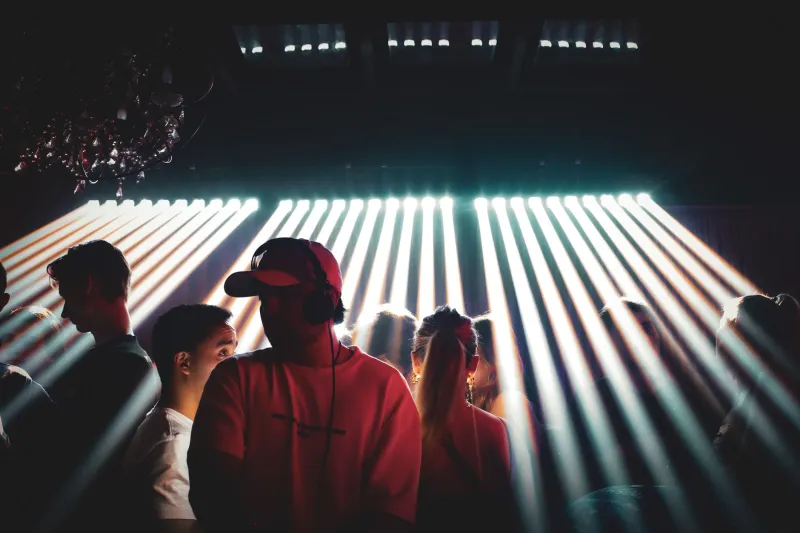
There's a moment that every regular club-goer knows but rarely thinks about consciously. The floor is locked in. The energy is peaking. And then — seamlessly, inevitably — the music shifts somewhere new, and instead of breaking the spell, it deepens it. Nobody in the crowd knows why it worked. The DJ does.
That invisible craft — the sequencing, the reading, the constant recalibration — is arguably the most underappreciated skill in electronic music. It doesn't show up on a spec sheet. You can't learn it from a YouTube tutorial in an afternoon. And it's the thing that separates a technically competent DJ from one who can genuinely move a room.
We dug into the decision-making framework that working DJs across Chicago, New York, Los Angeles, and beyond use to navigate a live set — and what emerged is part music theory, part behavioral science, and part something that defies easy explanation.
The Set Is Never Fully Written
Ask most working club DJs how much of their set is planned in advance, and the honest answer will surprise newcomers. "Maybe thirty percent," says one Chicago house DJ who's held a monthly residency on the West Side for the better part of a decade. "I come in with a rough arc in my head and maybe a handful of tracks I know I want to play. The rest is conversation."
That word — conversation — comes up constantly when you talk to DJs about sequencing. The dance floor isn't a passive audience. It's a feedback loop. The crowd's energy, density, body language, and even the way people are drinking and talking tells a skilled DJ what the room needs at any given moment.
In New York's underground techno scene, where sets can run four or five hours at spots like Nowadays or Bossa Nova Civic Club, DJs often describe the first hour as a kind of diagnostic process. You're not trying to peak the floor yet. You're learning who's in the room, what they're responding to, and where you have room to take them.
"The worst thing you can do is come out swinging at ten-thirty when the room is still half empty," explains a Brooklyn-based DJ known for her marathon deep house sets. "You blow your best records on people who are still getting their first drink. Then what do you have left?"
Energy Architecture: The Shape of a Set
Every great DJ set has a shape — a deliberate arc of energy that builds, releases, and rebuilds. Think of it less like a playlist and more like a piece of music itself, with movements and dynamics.
In practical terms, this means thinking about energy in zones. The opening section is about establishing a vibe and drawing people in. The middle of a set is where you do the heavy lifting — introducing tension, exploring sonic tangents, and testing the crowd's range. The peak is earned, not assumed. And the comedown, if you're given the time for one, is its own art form entirely.
Music theory plays a bigger role here than most casual fans realize. Harmonic mixing — sequencing tracks that share compatible keys — has become a foundational skill, aided by software tools like Mixed In Key and the Camelot Wheel system. When two tracks share the same key or move to a harmonically adjacent one, the transition feels emotionally continuous even if the tempo or texture shifts dramatically. When they clash, even a technically perfect beatmatch can feel jarring.
But theory is a tool, not a rulebook. Some of the most electric transitions in DJ history have been deliberate key clashes that created tension right before a drop. The difference is intention. Knowing the rule is what lets you break it with purpose.
The Psychology of the Dance Floor
Beyond the music itself, great DJs are reading human behavior in real time. This is where the craft gets genuinely fascinating.
A Los Angeles-based DJ who splits his time between festival stages and intimate warehouse parties describes watching the floor like a conductor watches an orchestra. "You're looking for the nodders," he says. "The people who are really locked in. When they're moving, the energy is real. When they start looking at their phones or drifting toward the bar, something's off — and you've got maybe two tracks to fix it before you lose the room."
Pace variation is one of the most powerful tools in a DJ's arsenal, and it's one of the most counterintuitive. Dropping the tempo slightly after a peak moment — rather than trying to sustain it — often deepens the collective experience. The body relaxes just enough to reset, and when the energy builds again, the release feels bigger. It's the same principle behind tension and release in film scoring or the dynamics of a live band.
Song selection also works on a collective memory level. Dropping a track that a specific crowd has a shared history with — a record that defined a particular moment in that city's scene, or a deeper cut that signals to the room that you know — creates a sense of recognition that's almost tribal. Chicago house heads respond differently to a classic Larry Heard record than a crowd in Miami or Austin would. Context is everything.
Instinct Is Just Pattern Recognition in Disguise
When you press working DJs on where their in-the-moment decisions come from, many of them struggle to articulate it beyond "instinct" or "feel." But what looks like instinct from the outside is really the product of thousands of hours of listening, performing, and paying attention.
Every set you play is data. Every record you pull that clears the floor teaches you something. Every transition that lands perfectly becomes a template your brain files away for future use. Over time, the decision-making process becomes faster and more automatic — but it's built on a foundation of deliberate practice and genuine musical curiosity.
The DJs who last — the ones with decade-long residencies and festival slots that keep getting bigger — tend to share one trait above all others: they never stop being students of music. They're digging for new records constantly, studying the history of the scenes they love, and listening to other DJs with the same analytical attention they bring to their own sets.
The crossfade, at its best, is never just a technical maneuver. It's a statement. A choice. A moment of communication between the person behind the decks and the people on the floor. And learning to make that choice well — consistently, intuitively, in real time — is what the art is actually about.