Two DJs, One Booth: What Back-to-Back Sets Reveal About Who You Really Are Behind the Decks
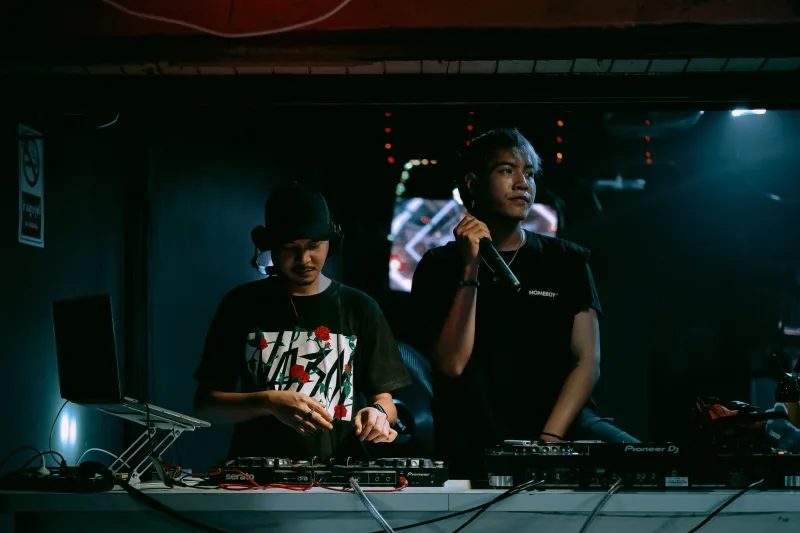
There's a moment in every back-to-back DJ set — usually somewhere around the second hour — where one of two things happens. Either the two artists find a kind of locked-in groove, finishing each other's musical sentences like old friends, or the whole thing starts to quietly unravel: mismatched energy, competing tempos, two distinct personalities pulling the dancefloor in opposite directions. The crowd can always feel it. And so can the DJs.
The B2B format has been a fixture of electronic music culture for decades, but it's had a serious moment in the spotlight over the last few years. From the legendary back-to-backs at Movement in Detroit to the spontaneous late-night pairings that happen at Brooklyn's Output (RIP) or the warehouse parties that still define the underground in cities like Chicago and LA, the format has a way of producing some of the most electric — and occasionally most disastrous — sets in the game. It's the format that rewards generosity and punishes ego more than any other.
What a B2B Actually Demands
On the surface, a back-to-back set sounds simple: two DJs share a booth and take turns playing tracks. In practice, it requires a completely different mental framework than a solo set.
When you're playing alone, you're the sole author of the narrative. You decide the arc, the tempo shifts, the moments of tension and release. In a B2B, you give up authorship every few tracks. Your partner might take a direction you didn't see coming. They might drop something that resets the energy entirely — for better or worse. Your job in that moment isn't to wrestle control back. It's to listen, adapt, and respond.
That last word is key. The best B2B sets aren't about two DJs taking turns. They're a conversation. Think of it like jazz improvisation: one player states a theme, the other responds, and together they build something neither could have arrived at solo. The decks become a shared instrument.
Practically speaking, this means a few things. You need to know your partner's library — or at least have a strong sense of their taste. You need to be comfortable handing off at moments that serve the set, not just when you've run out of ideas. And you need to be genuinely okay with the crowd responding more to your partner's selections than yours on any given night. That last part is harder than it sounds.
The Chemistry Factor
Ask any experienced DJ what separates a great B2B partner from a nightmare one, and you'll hear the same word over and over: listening.
"The worst B2B experiences I've had were with people who came in with a plan and stuck to it no matter what I played," says one Chicago-based house DJ who's been playing B2Bs at local club nights for the better part of a decade. "They weren't responding to me at all. They were just waiting for their turn."
On the flip side, a great partner is someone who hears what you're building and either amplifies it or gently redirects it with intention. They don't steamroll. They don't disappear into their crates and tune you out. They're present.
Musical range matters too. A B2B between two DJs who play the exact same stuff can get monotonous fast — there's no creative tension, no surprise. But a pairing between two artists with overlapping but distinct sensibilities? That's where the magic usually lives. Think about the classic Derrick May and Juan Atkins energy, or more recently the kind of genre-blurring B2Bs that have become a hallmark of festival culture at events like Coachella's Yuma tent or the underground stages at Burning Man's sound camps.
The best pairings tend to share a common emotional vocabulary even when their record bags look totally different.
What Goes Wrong (And Why)
Ego is the most common killer of a B2B set, and it shows up in a few different ways.
Sometimes it's a DJ who can't resist playing a long, complex mix right before the handoff — essentially making it impossible for their partner to transition cleanly. Sometimes it's someone who keeps reaching over to tweak the EQ after they've already handed off the decks. And sometimes it's subtler than that: a vibe of competition rather than collaboration that the crowd picks up on even if they can't quite name it.
There's also the practical issue of technical compatibility. Different DJs have different setups, different cue point conventions, different ways of organizing their libraries. If you haven't talked through the basics before you hit the booth — who's bringing what format, how you're splitting the mixer channels, what your handoff signal looks like — you're already behind.
Tempo and key mismatches are another landmine. If one DJ is deep in a rolling 128 BPM groove and the other wants to take it down into 120 BPM slow-burn territory, there's a right way and a very wrong way to make that shift. The right way involves communication, ideally before you're standing in front of 500 people.
How to Train for the B2B
If you've never done a back-to-back set and you want to get good at them, the honest answer is that you have to start practicing the underlying skills before you ever share a booth with someone.
The most important of those skills is active listening — not just to music in general, but specifically to what a DJ is doing structurally in a set. Watch live B2B recordings (there are dozens of great ones floating around on YouTube and SoundCloud) and study the handoffs. Where does one DJ end and the other begin? How do they signal a shift in direction? What tracks work as bridges between two different sounds?
Beyond that, broaden your library intentionally. The DJs who are the most versatile B2B partners are the ones who can pull something that fits almost any direction a set might go. You don't have to abandon your signature sound, but having records that can bridge your world to someone else's is genuinely valuable.
Practice the handoff itself. If you have a DJ friend you trust, set up a session where you deliberately hand off mid-set and see what happens. Notice how it feels to give up control. Notice what your instinct is when your partner takes things somewhere unexpected. That instinct — whether it's anxiety, excitement, or a creative spark — will tell you a lot about where you need to grow.
Finally, talk to your partner before the set. Not to over-plan, but to establish a shared understanding of the vibe, the crowd, the energy you're both trying to create. The best B2Bs feel spontaneous, but they're usually built on a foundation of mutual respect and a little bit of pre-game communication.
The Real Reward
Here's the thing about B2B sets that nobody really tells you until you've experienced it: when they work, they're genuinely unlike anything else in DJing. There's a specific kind of energy that comes from two people building something together in real time, in front of a crowd, with no script and no safety net. It's vulnerable in a way that solo sets rarely are.
And that vulnerability is exactly the point. The B2B format forces you to be present, to listen, to care about something bigger than your own set. It tests your musical knowledge, your technical flexibility, and your ego all at once. The DJs who come out the other side with a great set to show for it — those are the ones who've figured out something important about what this whole thing is actually for.
The mix never stops. But sometimes, it takes two to keep it moving.